
Hybridized writing for scientific literacy: pedagogy and evidence
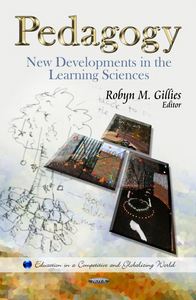
Ritchie, Stephen M., and Tomas, Louisa (2012) Hybridized writing for scientific literacy: pedagogy and evidence. In: Gillies, Robyn M., (ed.) Pedagogy: new developments in the learning sciences. Education in a Competitive and Globalizing World . Nova Science Publishers, Hauppauge, NY, USA, pp. 213-226.
![[img]](https://researchonline.jcu.edu.au/19431/2/Ritchie_Cover.JPG)
|
Image (JPEG)
Download (72kB) |
|
![[img]](https://researchonline.jcu.edu.au/style/images/fileicons/application_pdf.png)
|
PDF (Accepted Abstract)
- Accepted Version
Download (88kB) |
|
|
PDF (Published Version)
- Published Version
Restricted to Repository staff only |

Abstract
Disengagement of students in science and the scientific literacy of young adults are interrelated international concerns. One way to address these concerns is to engage students imaginatively in activities designed to improve their scientific literacy. Our ongoing program of research has focused on the effects of a sequence of activities that require students to transform scientific information on important issues for their communities from government websites into narrative text suitable for a lay reader. These hybridized stories we call BioStories. Students upload their stories for peer review to a dedicated website. Peer reviews are intended to help students refine their stories. Reviewing BioStories also gives students access to a wider range of scientific topics and writing styles. We have conducted separate studies with students from Grade 6, Grade 9 and Grade 12, involving case study and quasi-experimental designs. The results from the 6th grade study support the argument that writing the sequence of stories helped the students become more familiar with the scientific issue, develop a deeper understanding of related biological concepts, and improve their interest in science. Unlike the Grade 6 study, it was not possible to include a control group for the study conducted across eight 9th grade classes. Nevertheless, these results suggest that hybridized writing developed more positive attitudes toward science and science learning, particularly in terms of the students' interest and enjoyment. In the most recent case study with Grade 12 students, we found that pride, strength, determination, interest and alertness were among the positive emotions most strongly elicited by the writing project. Furthermore, the students expressed enhanced feelings of self-efficacy in successfully writing hybridized scientific narratives in science. In this chapter, we describe the pedagogy of hybridized writing in science, overview the evidence to support this approach, and identify future developments.
| Item ID: | 19431 |
|---|---|
| Item Type: | Book Chapter (Research - B1) |
| ISBN: | 978-1-62100-900-9 |
| Keywords: | scientific literacy, hybridized writing, imaginative engagement, pedagogy, writing-for-learning |
| Date Deposited: | 31 Jul 2012 05:25 |
| FoR Codes: | 13 EDUCATION > 1302 Curriculum and Pedagogy > 130212 Science, Technology and Engineering Curriculum and Pedagogy @ 100% |
| SEO Codes: | 93 EDUCATION AND TRAINING > 9302 Teaching and Instruction > 930201 Pedagogy @ 60% 93 EDUCATION AND TRAINING > 9301 Learner and Learning > 930101 Learner and Learning Achievement @ 30% 93 EDUCATION AND TRAINING > 9301 Learner and Learning > 930104 Moral and Social Development (incl. Affect) @ 10% |
| Downloads: |
Total: 223 Last 12 Months: 10 |
| More Statistics |
Actions (Repository Staff Only)
 |
Item Control Page |