
Paleontological exploration in Africa: a view from the Rukwa Rift Basin of Tanzania
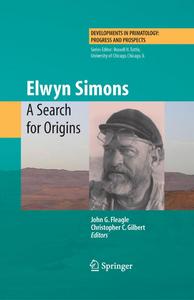
Stevens, Nancy J., Gottfried, Michael D., Roberts, Eric M., Kapilima, Saidi, Ngasala, Sifa, and O'Connor, Patrick M. (2008) Paleontological exploration in Africa: a view from the Rukwa Rift Basin of Tanzania. In: Fleagle, John G., and Gilbert, Christopher C., (eds.) Elwyn Simons: a search for origins. Developments in Primatology: progress and prospects, 9 . Springer, New York, NY, USA, pp. 159-180.
![[img]](https://researchonline.jcu.edu.au/18472/4/18472_Stevens_et_al_2008_Cover.JPG)
|
Image (JPEG) (Book Cover)
- Cover Image
Download (48kB) |
|
![[img]](https://researchonline.jcu.edu.au/style/images/fileicons/application_pdf.png) |
PDF (Published Version)
- Published Version
Restricted to Repository staff only |

Abstract
[Extract] The Mesozoic-Cenozoic transition was a period of dramatic global change during which time the Earth's continents were in the process of fragmenting from a large, relatively continuous landmass to assume a configuration similar to that seen today. The most significant tectonic activity in the southern hemisphere occurred during the Cretaceous-Paleogene interval, when the large Gondwanan sub-regions of Africa, South America, Australia, Indo- Madagascar and Antarctica became increasingly isolated from one another (Smith et al., 1994; Scotese, 2001). Continental dynamics of this scale are not only geologically significant, they also profoundly influenced the evolution of both terrestrial and marine biotas (Forster, 1999; Krause et al., 1999; Sereno, 1999; Lieberman, 2000; Upchurch et al., 2002; Humphries and Ebach, 2004). Indeed, the Cretaceous-Paleogene transition marks large-scale faunal turnover of major vertebrate and invertebrate taxa (e.g., extinction of nonavian dinosaurs, radiation of "modern" mammals and birds; Cracraft, 2001; Springer et al., 2003, 2004; Archibald and Fastovsky, 2004; Kielan-Jaworowska et al., 2004; Rose and Archibald, 2004; Clarke et al., 2005).
Numerous hypotheses have been proposed to explain the origin, diversification, and extinction of many vertebrate groups living on, or dispersing through, Gondwana during the Cretaceous and Paleogene. For example, molecular studies have postulated a Cretaceous-Paleogene African origin for a number of higher-level amniote clades, including Placentalia (Murphy et al., 2001 and references therein), Afrotheria (Hedges et al., 1996; Springer et al., 1997, 2003, 2005; Madsen et al., 2001; van Dijk et al., 2001), and neornthine birds (Cracraft, 2001). In particular, an ancient ( Cretaceous/Paleocene) Gondwanan primate origin has been proposed, with a strepsirrhine-haplorhine divergence occurring shortly thereafter (e.g., Tavare et al., 2002). African origins have also been proposed for a number of Malagasy terrestrial and freshwater groups (e.g., etropline cichlids (Vences et al., 2001); lemurs (Yoder et al., 2003, Poux et al., 2005); tenrecs (Poux et al., 2005)). Yet divergence time estimates retrieved by molecular studies for various clades often vastly predate the first occurrences of those groups in the fossil record (e.g., Smith and Peterson, 2002), instigating considerable debate as to the time of origin and path of dispersal for a broad range of taxa (e.g., Martin, 2000; de Wit, 2003; Schrago and Russo, 2003; Rose and Archibald, 2004; de Queiroz, 2005; Masters et al., 2006). This is perhaps not surprising, as Martin and others have demonstrated that by any measure, the vertebrate fossil record (particularly in places like Africa) is dismayingly incomplete, such that dates derived from paleontological data alone are likely to significantly underestimate true divergence times (Martin, 1993, 2000; Paul, 1998; Tavare et al., 2002; Miller et al., 2005). Whereas questions remain regarding the reliability of molecular clocks with respect to calibration and rate heterogeneity (Smith and Peterson, 2002), it is also clear that sustained work is needed to improve sampling of the fossil record and test molecular hypotheses by providing fossil data that can be used to more rigorously calibrate and refine divergence time estimates (Seiffert et al., 2003; Yoder et al., 2003). This is particularly true of undersampled regions where new discoveries can have a profound effect on hypotheses based on presence/absence data (e.g., a Cretaceous gondwanatherian mammal from Tanzania; Krause et al., 2003b; O’Connor et al., 2006). Moreover, recent studies examining the robusticity of biogeographic reconstructions demonstrate that even a single new outgroup or ingroup fossil can powerfully influence area-of-origin interpretations (e.g., Stevens and Heesy, 2004, 2006; Heesy et al., 2006).
| Item ID: | 18472 |
|---|---|
| Item Type: | Book Chapter (Research - B1) |
| ISBN: | 978-0-387-73895-6 |
| Date Deposited: | 02 Nov 2011 05:16 |
| FoR Codes: | 04 EARTH SCIENCES > 0403 Geology > 040308 Palaeontology (incl Palynology) @ 100% |
| SEO Codes: | 97 EXPANDING KNOWLEDGE > 970104 Expanding Knowledge in the Earth Sciences @ 100% |
| Downloads: |
Total: 232 Last 12 Months: 9 |
| More Statistics |
Actions (Repository Staff Only)
 |
Item Control Page |